Sunday, March 7, 2010

Jaybird SB1 Sportsband Bluetooth Headphones review


Announced last month, Jaybird’s SB1 Sportsband Bluetooth Headphones may be intended for gym-goers – in fact they come with a lifetime guarantee against sweat – but with discrete styling and a reasonably budget $89 MRSP are likely to appeal to those nowhere near the treadmills. Are the Jaybird’s cheap and cheerful, or does audio quality let them down? Check out the


SlashGear review after the cut।


Jaybird SB1 Sportsband Bluetooth Headphones 5 540x311

The packaging is nicely designed, but not exactly stuffed full। Inside the flocked-plastic insert sits the SB1 headset itself, along with a small printed “Quick Start” guide and a USB charging cable that ends with a non-standard plug. Jaybird rate the – non-removable – battery as good for up to 8hrs music or 11hrs talktime, and a full charge takes 2.5hrs. The battery indicator – which is on the outside, rather than discretely tucked on the inside edge as we prefer – lights red when charging and turns off when complete.


Controls are all clustered on the left-hand earpiece, with a central power switch/multifunction button – that, held down, kicks the SB1 into Bluetooth pairing mode – surrounded by track skip and volume keys. Underneath is the power port and a microphone for using the SB1 as a hands-free headset. The multifunction button operates play/pause during music playback, answers or rejects an incoming call, or triggers voice-dialing when held down for two seconds.

The regular 0000 Bluetooth PIN is used, and we were readily able to hook up the SB1 headphones to a number of different test devices। Each earpiece extends out by around an inch, and the flexible headband – which is rubber coated on the inner surface – is sufficiently tight in its grip that even when jogging we didn’t feel the headphones would fall off. We wouldn’t argue with a little extra padding on the earpieces, though, since it’s your ears they’re gripping to stay on your head. Once you’re familiar with the button layout, they fall easily to hand and don’t require too firm or precise a jab in order to press.


Jaybird SB1 Sportsband Bluetooth Headphones 6 540x438

Audio quality is decent, given the constraints of Bluetooth technology with surprising amounts of bass and only relatively muddy mid-ranges and slightly underwhelming treble to contend with; we always prefer more high-fidelity options like Kleer, but there’s no arguing with the flexibility of use that Bluetooth brings. Even Apple now support A2DP in various iPhone and iPod touch models, though since they don’t comply with the AVRCP profile you won’t be able to use the track skip and play/pause controls to remotely operate your Apple PMP. The same functionality worked with no problems on a number of cellphones, however, and the SB1 headset paused media playback on an incoming call.

Our one criticism would be on outgoing audio quality, which seems particularly susceptible to background noise. We wish Jaybird had implemented one of the DSP noise cancellation systems found on some of the newer mono Bluetooth headsets we’ve tested lately, seeing as their own “Clear Voice Capture” doesn’t hold up to that competition, but given those earpieces generally cost more than the SB1’s $89 price tag we can’t complain too much.

Those other headsets don’t get a lifetime sweat guarantee, either, something Jaybird are confident enough in the SB1’s to offer; in fact, they even say you can run in the rain without problems. Bluetooth range is quoted at 10m, and as is typical for the technology we found it’s pretty dependent on where your PMP is. Trying to make a connection with your body in the way can lead to occasionally patchy audio, but it’s not so fickle as other headphones we’ve tried.

Jaybird’s obvious rival is the Jabra HALO, which we reviewed back in September last year। At $129, the HALO headphones are almost 50-percent more expensive than the SB1’s, and while the Jabra controls – which are all touch sensitive – are certainly discrete, the tactile buttons on the Jaybird are arguably easier to use. There’s no wired option (for when the battery runs out) on the Jaybirds, but the SB1’s talktime rating is higher: 11hrs compared to the HALO’s 8hrs. Practically, we found the SB1’s good for over 8hrs of solid stereo audio, particularly handy when paired with a laptop for watching video. Jaybird also make a reasonably big deal of the SB1’s Skype and VoIP compatibility, though we wish you could fold them down to more easily slot into a laptop bag.


Still, $89 (or cheaper if you shop around online) is an impressively low price, and the Jaybird’s styling doesn’t instantly mark you out as a complete geek. Those looking for pristine audio quality already know to stay away from Bluetooth, but users looking for gym-friendly, sturdy and affordable headphones – with a fair bass kick to them – should definitely take a look at the Jaybird SB1 Sportsband Bluetooth Headphones.


SlashGear Week in Review – Week 9 2010


Welcome to this week’s Week in Review! With CeBIT going this week new laptops and computer hardware were announced in abundance. Monday we spied the Gigabyte T1000P multitouch netbook. The convertible device looks nice and runs Win

dows 7 Starter.


gigabyte touchnote t1000p cebit 2010 540x4031


A slew of new Archos devices turned up this week and among them was the Archos 7 Home Tablet. The tablet ended up

in its own hands-on video and we want one pretty bad. Asus went official at CeBIT with its Eee PC 1018P sporting USB 3.0 and Bluetooth 3.0. The machine is clad in silver and looks very Mac to me. Acer dropped a pair of 3D ready projectors this week called the H5360 and the X1261. The H5360 is a 720p HD projector with 2500 lumens of brightness and the X1261 has XGA resolution. NVIDIA officially debuted its ION 2 platform, which is actually called Next-generation ION. The new platform will be found inside 30 devices by summer. Asus’ Jonney Shin has stated that that Eee Keyboard we have been waiting for since CES 2009 will finally land in April. The thing is a netbook crammed inside a keyboard form factor. Asus has unveiled the new Eee 1201PN with ION 2 sporting a 12.1-inch 720p resolution screen and the Intel N450. The 12.1-inch netbooks pack the full power ION 2 platform so the machine should have impressive performance. Mamiya pulled the wraps off a new, and crazy expensive, digital camera this week called the DM40. The beast can shoot at 60 frames per minute and has a dual-mode shutter all for only $21,990. Pioneer debuts some new 3D-ready AV receivers this week that were surprisingly cheap. The receivers include the VSX-520-K and the VSX-820-K at $229 and $299 respectively. The 820 is Works with iPhone certified. Averatec debuted it’s new N1200 netbook series laying claim to the thinnest and lightest title. The machines have 10.1-inch screens and are under 2.2 pounds. TiVo dropped its new Premiere and Premiere XL DVRs on us this week. The two machines are similar with lots of new features with the main difference being the XL has a larger HDD and is THX certified. After Apple insisted that production for the iPad was on track we heard the iPad is landing on March 26 and the fans camping out to get one the first day might get some sort of “special gift.” What that gift will be is unknown. Boutique notebook maker Maingear unveiled its latest machine this week called the mX-L 15. The machine has Intel Core i5 or i7 processor options and a 15.6-inch screen. It’s rare today to see a new film-based camera debut. This week the Lomo LC-A+ Gold turned up clad in 24K gold plate in very limited numbers. Only 130 of the cameras will be made with a price of £460. We posted up our review of the Motorola BACKFLIP for the AT&T network this week. In the end, the device didn’t run as well as most Android phones we have tested but the device wasn’t bad on the whole. Pics of the NVIDIA GTX 480 Fermi video card leaked late in the week. The video card is expected to turn up from several manufacturers this month. Onkyo dropped a new range of 3D-ready HDMI 1.4 AV gear this week. The line includes a couple receivers, mini-systems, and some 2.1 setups too. Intel is rumored to be bringing a new range of overclockable CPUs to market soon. It would be cool to see overclock friendly CPUs from Intel in ranges other than its high-end Extreme Edition parts. HP unveiled its Mini 210 Vivienne Tam edition netbook based on the “Butterfly Lovers” theme. The machine is a basic Mini 210 clad in gold and butterflies. We reviewed the Viewsonic ViewBook Pro VNB131 notebook this week that was obviously inspired by the MacBook Pro line. The machine offers a thin profile, good

performance, and a modular bay with an optical drive, extra battery, or a blank that can be inserted. Thanks for reading this week’s week in review! See you next week!


Panasonic DMC G10 and G2 Get Official Announcement


We’ve got a pair of brand-spanking-new Micro Four Thirds cameras for you to fantasize about on this lovely Sunday morning/afternoon/evening. These come by way of Panasonic, and while we’re sure that these aren’t going to be any kind of game changer in the photo world, surely these will stand out to someone out there. They’ve got some pretty good features, so if you’re a camera buff, stick around after the break, and find out whether or not Panasonic has cooked something up worthy enough of your hard-earned cash.


Lumix G10


We’ll start off with the DMC-G10. Why? Because it’s throwing around that it’s got a pretty impressive title: world’s lightest interchangeable lens camera with a viewfinder. Bold words, right? Panasonic probably just removed their glove and slapped someone. The G10 is touting 12.1 megapixels with Live MOS sensor, Venus Engine HD II technology, and a 3-inch rear LCD that lacks any kind of tilt, swivel, or touch options. There’s not much to rock the socks in the features department, and sadly, we’ll have to end it there.


The DMC-G2 has a pretty impressive title as well: the first interchangeable lens system camera with touch-controlled shooting. We’re not exactly sure how we feel about touching a screen to take a picture (at least not on a camera like this), so we’ll go ahead and chalk that one up to personal preference. The G2 is rocking the same 12.1MP Live MOS sensor, Venus Engine HD II tech, a 3-inch LCD with touch options, and finally a 720p (AVCHD Lite) movie mode. Unfortunately, neither one of the cameras has a release date, or final pricing, so you can stop holding your breath. As soon as we get any kind of update, we’ll be sure to pass on the information. Anyone out there planning on buying one? And if so, which one?


Motorola Driod Lost Internet Connection


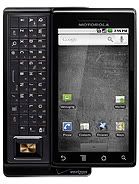
I woke up this morning and I can't connect to the internet with my Motorola Android cell phone. I kept getting the "no internet connection available" error. I found out that I lost internet connection since last night when a friend of mine happen to call me early and told me I'm not online via Instant Messenger. I am almost always online via Android IM application. I only turn my phone off when I'm charging it. I started to worry, thought I accidentally pressed something wrong last night that messed up my Motorola Droid but before I panicked I logged on my computer and started searching for answers online.


Some Motorola Droid users who had the same problems before, said that rebooting their phone worked for them. So I tried it, rebooted my Droid but did not work for me. I tried it a couple of times but still can't connect. I have been having 3G connection issues couple of days ago, but this morning was the first time I can't connect to the internet at all. Some Motorola Droid users said that restarting the phone usually fixed it.

Following other users advice, I tried calling *228 (Verizon over the air programming) and selected option 2 to update roaming capabilities. After a successful programing, guess what? It Worked!!!!
I'm connected to the internet.

So, if you happen to reach this post because your Motorola Droid lost internet connection, try those two things I mentioned above, it might work for you too. If it's not gonna work for you, it's probably better you call Verizon customer service or take it in to a Verizon store. Good Luck!

Saturday, March 6, 2010

Viliv S10 Convertible Tablet Showcased and Touched, A lot


We’re fans of videos ’round these parts, especially when they go to ridiculous lengths to show off a certain products coolest features. You can thank Chippy from UMPCPortal, where he goes above and beyond the call of duty, and brings you a 14 minute video starting from the machine’s unboxing, to a segment where he starts to scribble. Scribble, and scribble. Like we said, we like when a reviewer showcases the coolest features. Chippy was lucky enough to get a pre-production model, but it is one of the final samples before the start of final production.


Viliv S10 540x405


The S10 Blade is shipping with the Windows Aero feature running, but the reviewer wants everyone to know that turning this feature off may be the best bet, as it’s a resource hog if left on. But on the other side of the coin, Chippy seems pretty pleased with the S10 so far. The build quality is nice, the SSD is very fast (with some great application start times), and the 3G reception is top-notch.

Overall, even if this model is a pre-production version, the Viliv s10 seems to be a winner. Of course, there still needs to be some extensive testing done on the finished version, but from what we can see right now, the company is on the right path. Especially if that $699 starting price point holds true. Then again, for the features and the price at the top of the ladder, you could probably find better things to buy when the time comes.


Microsoft Pink leaks again: April 20th Verizon launch? [Update: & Vodafone!]


Microsoft’s been a leaky old sieve lately, with Courier slipping out earlier and even more Project Pink news just now. After yesterday’s Verizon revelation and the subsequent firmware leak comes new images of the two Sharp-manufactured Pink phones, the Pure and Turtle, themselves, along with a potential launch date of April 20th.

Update: Apparently the devices will also get an international launch – in their GSM formats – with carrier Vodafone.


microsoft project pink pure turtle 540x169


Larger images after the cut


According to Engadget’s sources, the Pink phones will indeed be targeted at a more youthful market than Windows Phone 7. The promotional campaign will center on a “truly madly deeply” slogan, presumably leaning on the idea that the entry-level smartphones will become the essential lynchpin of your social life.

As for what we already know about the two devices, beyond that there will – eventually – be both CDMA and GSM models, and that the Pure has a 480 x 320 display while the Turtle has a 320 x 240 screen, it’s all a bit of a mystery. Social networking seems to be heavily integrated – along with Zune HD style media functionality – so it seems very likely that these are the devices Microsoft hope will grab the attention of Sidekick lovers.


Alienware M11x video unboxing


It’s turning into a day of unboxings here at SlashGear; after the HTC Legend earlier on, now it’s the turn of Dell’s Alienware M11x to strut its stuff in front of the camera. An 11.6-inch ultraportable, the M11x distinguishes itself by virtue of Dell’s ambitious gaming claims, and to deliver on those they’ve packed it full of performance hardware. Check out our first impressions and unboxing video after the cut.


Dell Alienware M11x SlashGear 14 540x421


You can’t argue with the Alienware M11x’s spec sheet. Our review model has the upgraded Intel Core 2 Duo 1.3GHz SU7300 processor (the regular CPU is a dualcore Pentium SU4100) together with 4GB of DDR3 memory (8GB max) and the 256GB SSD (a 320GB 7,200rpm HDD is standard). There are also dual-graphics, the regular Intel integrated chipset and NVIDIA’s GeForce GT 335M with 1GB of its own memory. On the Intel GPU, with the standard 6-cell battery, Dell reckon you’ll see up to 8.5hrs of runtime; obviously that’ll be brought right down if you flip over to the GeForce chip and start gaming.

Ports are plentiful, with VGA, HDMI, and DisplayPort for hooking up external screens if the 11.6-inch 1,366 x 768 LED-backlit LCD isn’t big enough for you, as well as FireWire, USB and gigabit ethernet. eSATA does seem an odd omission, though, and of course there’s no optical drive (though Dell tell us there’ll be an optional external drive available as an accessory).


Dell Alienware M11x SlashGear 11 540x235


Build quality is high, though the M11x is a real fingerprint magnet. The “Cosmic Black” casing is sturdy, but it’s the high-gloss display which is already proving tricky to keep smear-free. We wouldn’t argue with a little extra brightness at its maximum setting, either. The keyboard – like several other parts of the notebook – is LED backlit and there’s a preloaded app which you can use to cycle through various colors; more importantly it has above-average travel and doesn’t feel mushy. No room for a separate numeric keypad, but Alienware do slap their trademark glyphs across the standard gaming keys.

We’ve not had a chance to put the Alienware M11x through its paces with benchmarking or gaming yet, but already the components are showing a turn of speed we wouldn’t usually expect from a machine this size. Windows 7 Home Premium 64-bit loads quickly, and resuming from standby takes mere seconds. If battery life really does live up to Dell’s claims then this could easily become one of our favorite ultraportables. Until the full review, then, enjoy the live gallery and unboxing video!


iPad with a Samsung

You just know it's an iPad, right? (Credit: Josh Lowensohn/CNET) The Apple-Samsung trial has been such a show that it has invaded my he...